


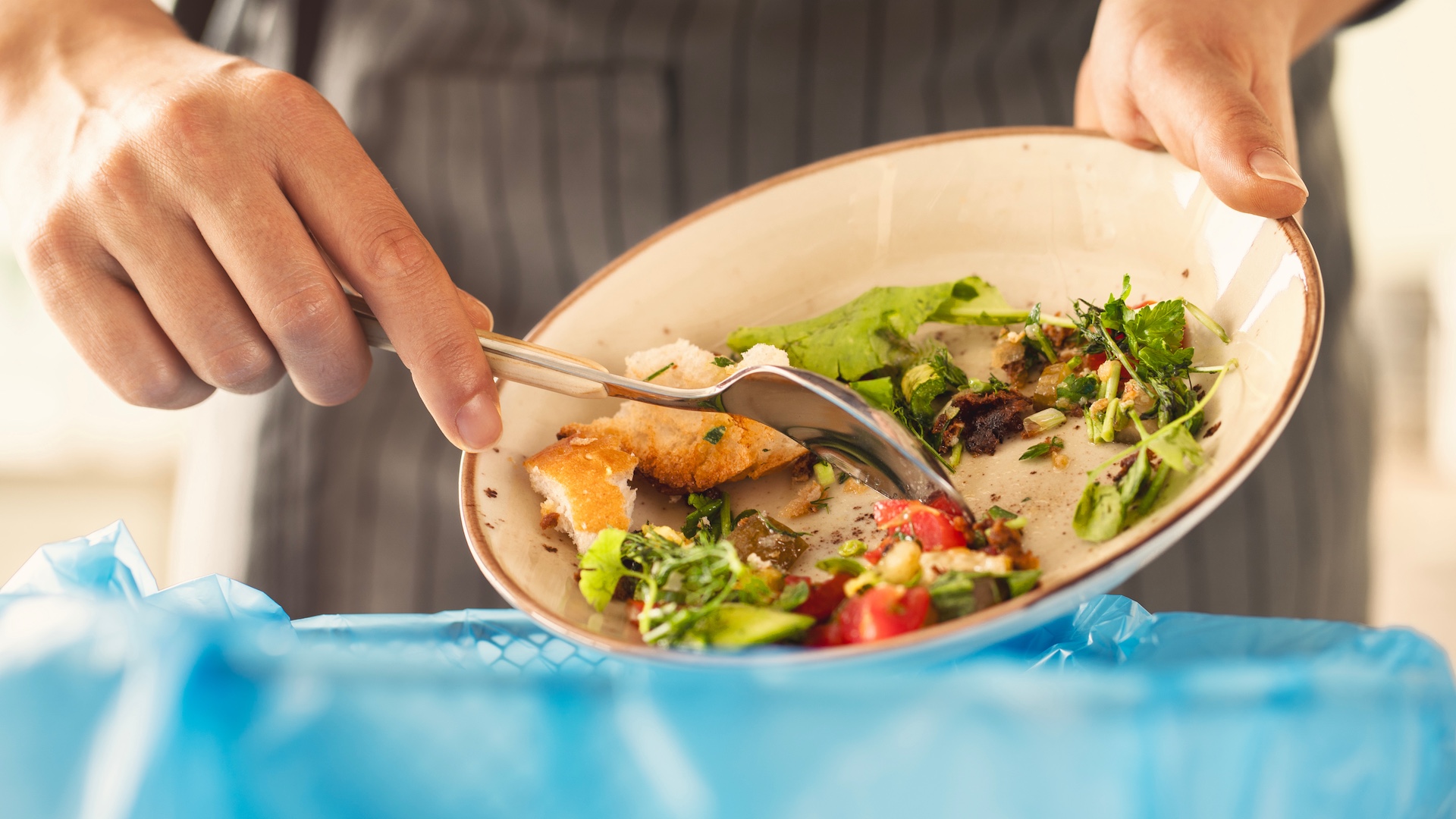
This step comes as part of broader Simpler Recycling regulations, which require commercial organisations to separate waste effectively. Our Environmental Sustainability Lead, Claire Thew, explains what’s changing and why food waste has been an underappreciated part of the wider sustainability conversation for too long.
Food waste recycling may seem like a relatively minor issue in relation to some of the other environmental challenges in the UK. But there’s a good reason why money and resources are being put into making the disposal of food waste a non-negotiable weekly activity for both businesses and households.
Since Simpler Recycling rules were first written into UK law as part of the Environmental Act 2021, there has been a steady push to get both households and the business community taking a more proactive role in reducing contributions to landfill.
In April 2025, Simpler Recycling made it essential for all organisations of 10 or more employees to separate rubbish into:
· Dry recyclables
· Food waste
· General/non-recyclable waste
The same obligations will be placed on companies of under 10 employees from April 2027, with the overall aim of ensuring that all organisations in the UK are minimising the volume of waste in landfill and maximising recycling efforts.
So, why are the food waste updates in 2026 relevant?
As we all know, hybrid and remote working have become widespread since the pandemic. In fact, 49% of workers spent some or all of their time working from home 2025. This means that, although homes have had receptacles for dry recyclables and general waste over many years, food waste containers have been lacking in many parts of the country.
Understandably, the government couldn’t simply introduce regulations for businesses and ignore the fact that contributions from households are higher than ever.
It’s worth pointing out that household garden waste bins are not the same as food waste bins. While garden waste – comprised of plantmatter – may be safely composted – the disposal of wider food waste requires anaerobic digestion at dedicated AD plants.
These AD plants fulfil two roles:
1. They ensure that food items such as meat and dairy products (which can spread pathogens and attract pests) decompose in asuitably safe environment.
2. Breaking down food waste using microorganisms generates biogas (a useful renewable energy) and bio-fertiliser for farms
What happens if food waste goes to landfill?
If you’ve spent many years scraping your plates clean into the general waste bin and then dropping your bag into the wheelie bin outside, you might ask why things have to change. The reason for this is that the methane given off by decomposing food waste in landfill is highly problematic – in fact, it is 25 times more potent as a greenhouse gas than carbon dioxide, over the same time period.
By handling food waste more effectively and utilising it to create a renewable fuel in the form of biogas, the adoption of food waste bins could have a hugely positive impact in the UK.
It’s estimated that household food waste contributes 16-18 million tonnes of CO2 equivalent each year and so b ydramatically reducing this waste we can all make positive change.
So, whether you are in the office, working from home or off the clock and enjoying your leisure time, it’s well worth thinking about the importance of utilising any food waste bins that are available to you.
To steal a phrase from a well-known retailer: Every little helps.
A final thought
Amidst updated regulations, we shouldn’t forget that there is another important way to reduce food waste – buying, preparing and eating the appropriate amount of food. It is estimated that £17bn worth of edible food was wasted last year, costing the average household of four around £1,000 peryear.
By taking care to value food consumption, households can both reduce cost and reduce environmental impact.
Is your organisation looking to take its environmental responsibilities seriously?
We can help. Let’s talk.

.png)
.png)


